I remember my first attempt at a giant holiday cookie that turned into a thin, misshapen Frisbee — so this 4th of July monster cookies recipe is all about fixing that. I developed it to give you big, scoop-sized cookies with a slightly crisp edge, a tender, chewy center, and predictable spread every time.
If you want cookies that hold colorful mix-ins, bake evenly, and still feel homemade, keep reading — I’ll walk through chilling, scoop size, oven setup, and the visual cues that mean ‘done.’
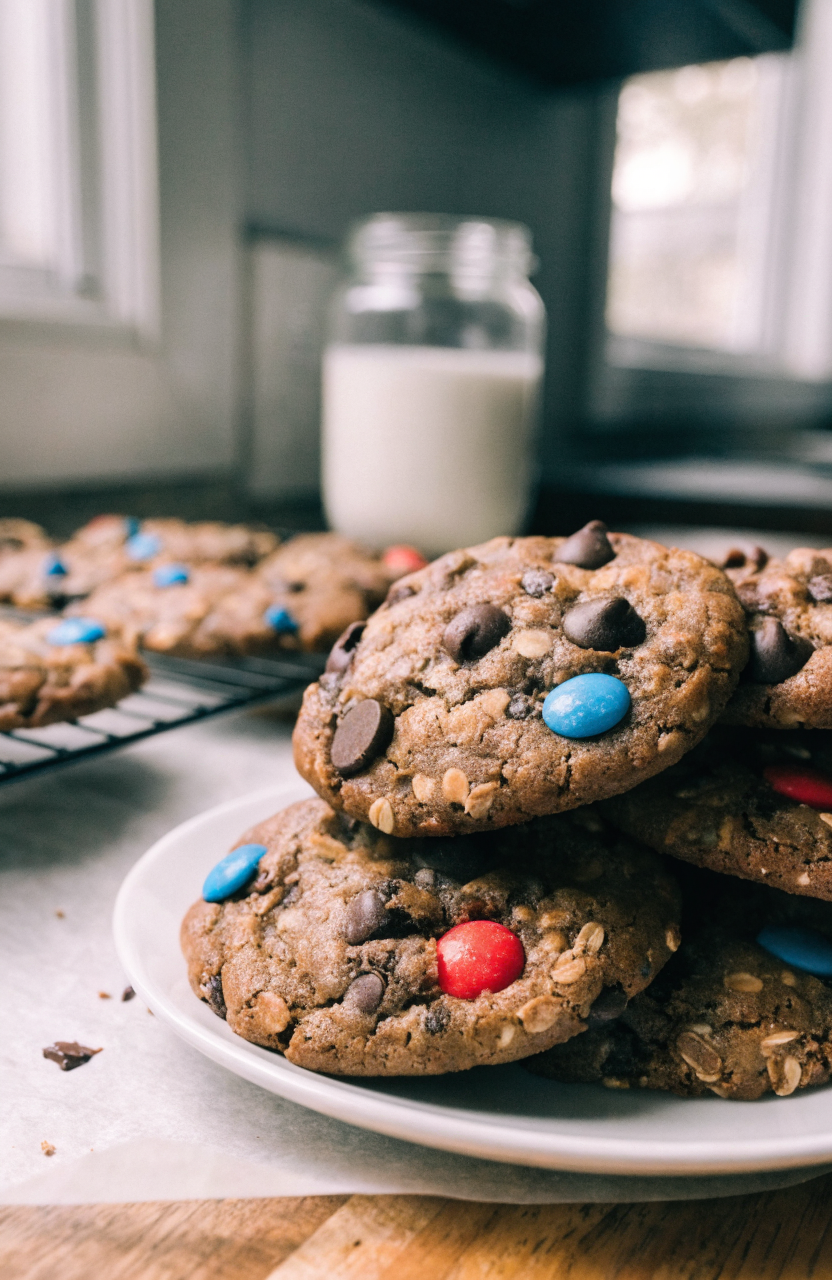
Why this 4th of July monster cookies works
The part that matters here is spread control and internal moisture. I used a slightly higher-than-usual flour-to-fat ratio and browned butter for flavor, then cooled the butter before folding it into the dough so it behaves like creamed butter rather than liquid oil. Chilling the dough solidifies fats and hydrates the flour so the cookies keep their rounded domes when baked. I also standardized the scoop size (about 4 tablespoons) so the baking time is predictable.
These 4th of July monster cookies hold their structure and look festive on a dessert table while still offering a tender interior and crisp rim.
During testing I learned that too-warm dough and an overwhip during creaming produced flatter cookies; switching to a gentle mix and a 30–60 minute chill fixed both. The result is an approachable cookie that still feels decadent: a thin, crisp rim, a tender middle, and a weighty bite from oats and mix-ins that won’t slide off the top.
Key takeaways
- Chill the dough to prevent excessive spread and preserve domed cookie shape.
- Use the 4-tablespoon scoop for consistent, giant cookies and adjust bake time for smaller sizes.
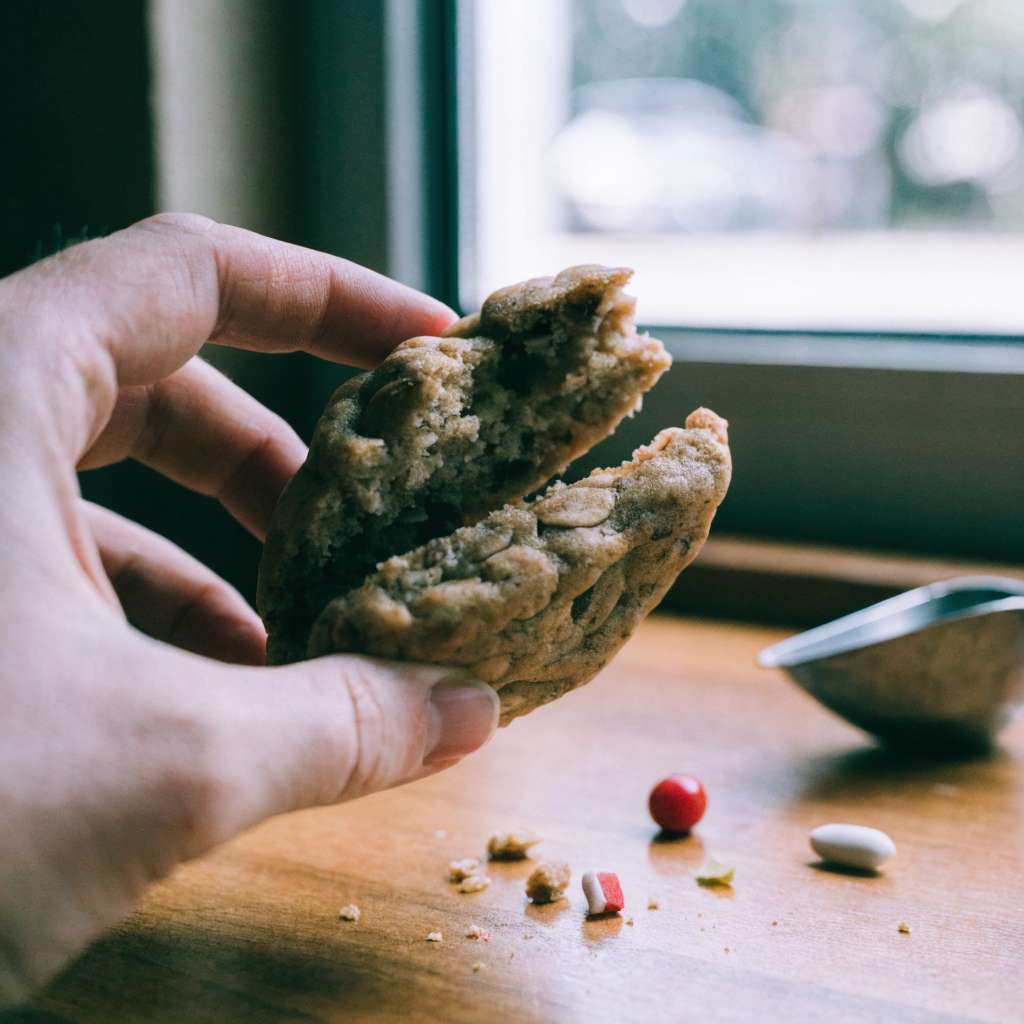
- Watch the cookie edge and center—not just time—to judge doneness: golden edges and a slightly soft center are ideal.
Ingredients you’ll need and what to substitute
This recipe uses pantry-friendly ingredients with a few texture-forward choices: old-fashioned rolled oats add chew and structure, while a mix of quick oats (optional) can speed hydration. I brown the butter briefly for a nutty note, but you can skip browning and use melted then cooled butter for a milder flavor. I use light brown sugar for moisture and chew; swapping for all white sugar will yield a drier, crisper cookie. The recipe calls for a combination of flour and a touch of cornstarch to help set the edges without turning the center crumbly.
Realistic substitutions:
- Oats: Use all old-fashioned rolled oats for maximum chew; quick oats are fine but slightly softer.
- Chocolate and mix-ins: Swap red/blue candy pieces for plain M&Ms, chocolate chips, or chopped roasted nuts. If using nuts, reduce total mix-ins by 1/4 cup.
- Butter: If you prefer not to brown butter, melt and cool to warm (about 100–110°F) before mixing; do not use hot butter.
Equipment
You don’t need anything fancy, but consistency helps:
- Large rimmed baking sheet (half-sheet 18×13 inches) — line with parchment.
- 4-tablespoon cookie scoop or two-tablespoon scoop for smaller cookies.
- Stand mixer or hand mixer for gentle creaming (optional but helpful).
- Cooling rack and a small bowl for mix-ins.
How to make 4th of July monster cookies
Prepare the browned butter and dry mix
Preheat the oven to 350°F with a rack in the center. Brown 10 tablespoons of unsalted butter in a light-colored skillet over medium heat, swirling until you see amber bits and a nutty aroma, about 4–6 minutes; remove from heat and let cool to 110–120°F so it’s warm but not hot. While butter cools, whisk together 2 1/4 cups all-purpose flour, 1/2 teaspoon cornstarch, 1 teaspoon baking soda, 1/2 teaspoon baking powder, and 1/2 teaspoon kosher salt in a bowl. Stir in 1 1/2 cups old-fashioned rolled oats and set aside.
Cream sugars and combine dough
In a mixer bowl, combine 1 cup light brown sugar (packed) and 1/2 cup granulated sugar. Add two large eggs and 2 teaspoons vanilla extract and beat just until blended. Slowly pour in the cooled browned butter while mixing on low; stop as soon as the mixture is homogenous. If you’re using a hand mixer, do this over a bowl to avoid splatter. Fold the dry mix into the wet just until no streaks of flour remain. Stir in 1 cup red and blue candy-coated chocolates, 1 cup semisweet chocolate chips, and 1/2 cup chopped toasted pecans or peanuts if using (optional). The dough will be thick and slightly tacky.
Chill for spread control
For reliable domes, chill the dough for 30–60 minutes in the refrigerator. If you’re short on time, 20 minutes helps but expect slightly flatter cookies. Chilling firms the butter and allows the oats to absorb liquid so cookies bake with a taller profile.
Shape and bake
Line a rimmed baking sheet with parchment and space scoops 3 inches apart. Use a 4-tablespoon scoop (about 2 ounces) for a true monster cookie — you’ll get about 18 cookies. Bake at 350°F for 12–15 minutes. Look for golden-brown edges and a center that still looks slightly glossy and soft; the cookies will continue to set as they cool. If the center looks very wet or the edges are still pale, add 1–2 minutes; if edges are very deep brown after 10 minutes, reduce oven temperature by 10°F next time. Let cookies cool on the sheet for 8–10 minutes before transferring to a rack to finish cooling.
Things I learned the hard way
- Don’t skip chilling: my first batch at room temperature spread thin because the butter was too soft. A 45-minute chill fixed it.
- Overmixing dries the dough: mix only until the flour is combined to avoid developing excess gluten.
- Watch your oven: older ovens run hot; check the first sheet 2 minutes early to avoid overly dark edges.
- Scoop size changes bake time: smaller cookies (2-tablespoon) bake in 9–11 minutes; reduce bake time and watch edges.
- Browned butter enhances flavor but timing matters: remove from heat as soon as brown bits form to avoid burning.
- If mix-ins sink, press a few extra pieces on top of each scoop before baking so each cookie looks festive.
Variations to try
- Patriotic oatmeal-chocolate bars: Press chilled dough into a 9×13 pan, top with extra candies, and bake 18–22 minutes at 350°F for thick cookie bars; cool completely before slicing.
- Gluten-free: Substitute a 1-to-1 gluten-free baking flour and reduce oats to 1 cup to avoid a crumbly texture; expect slightly different spread and a longer chill time.
- Nut-free: Omit nuts and add 1/2 cup sunflower seeds or extra chocolate chips; watch for a slightly softer center and reduce oven time by 1–2 minutes if necessary.
- Smaller drop cookies: Use a 2-tablespoon scoop and bake at 350°F for 9–11 minutes for cookie-size treats ideal for bake sales.
Storage, freezing, and reheating
Store cooled cookies at room temperature in an airtight container layered with parchment for up to 4 days. To freeze, arrange baked cookies in a single layer on a tray to hard-freeze for 1 hour, then transfer to a freezer-safe bag for up to 3 months; thaw at room temperature. For dough freezing, portion scoops onto a tray, freeze solid, then move to a bag; bake from frozen adding 1–2 minutes to bake time and watch for doneness cues. Reheat leftovers in a 300°F oven for 4–6 minutes to refresh the edges and soften the center, or microwave a single cookie for 10–15 seconds for a warm bite.
What to serve with 4th of July monster cookies
These cookies pair well with chilled milk, iced coffee, or a simple fruit salad for a summer picnic. For a dessert spread, serve with vanilla ice cream for an ice cream sandwich station, alongside lemon bars for a bright contrast, or with a pitcher of homemade lemonade to balance the sweetness.

4th of July Monster Cookies (Giant Soft-Chewies with Mix-Ins)
Ingredients
Equipment
Method
- Melt and brown 10 tablespoons unsalted butter in a light skillet over medium heat until amber bits form, 4–6 minutes; remove from heat and cool to 110–120°F.
- Whisk together 2 1/4 cups all-purpose flour, 1/2 teaspoon cornstarch, 1 teaspoon baking soda, 1/2 teaspoon baking powder, and 1/2 teaspoon kosher salt, then stir in 1 1/2 cups rolled oats and set aside.
- In a mixer, combine 1 cup packed light brown sugar and 1/2 cup granulated sugar; add 2 large eggs and 2 teaspoons vanilla and mix until blended.
- With the mixer on low, slowly add the cooled browned butter until just combined; avoid overmixing.
- Fold the dry ingredients into the wet just until combined, then stir in 1 cup red and blue candy-coated chocolates, 1 cup semisweet chocolate chips, and 1/2 cup chopped nuts if using.
- Scoop the dough with a 4-tablespoon scoop onto a parchment-lined baking sheet, spacing 3 inches apart; chill the scooped dough for 30–60 minutes for best spread control.
- Preheat the oven to 350°F with a rack in the center. Bake chilled scoops 12–15 minutes until edges are golden and centers look slightly glossy but set.
- Cool the cookies on the sheet for 8–10 minutes before transferring to a cooling rack to finish setting.
Notes
Frequently asked questions
Can I make the dough ahead? Yes. You can prepare the dough, portion it into scoops, and refrigerate covered for up to 48 hours before baking; the chilled dough often yields better shape and flavor. If refrigerated longer, bring scoops back to fridge temperature before baking to maintain consistent bake times.
Why did my cookies spread too much? Too-warm dough, too little flour, or an over-greased baking sheet are common causes. Chill the dough, measure flour accurately (spoon and level), and use parchment instead of greasing the pan.
How do I know when these giant cookies are done? Look for golden-brown edges and a center that still looks slightly glossy and soft; the cookies will finish setting as they cool. They should not look wet in the very center.
Can I freeze the dough or baked cookies? Yes. Freeze scooped dough on a tray, then store in a bag for up to 3 months and bake from frozen adding 1–2 minutes. Freeze baked cookies layered with parchment in an airtight container for up to 3 months and thaw at room temperature.
Can I make these nut-free for school events? Absolutely. Omit nuts and replace with extra chocolate chips or seeds; note that texture will be slightly softer without the crunch of nuts.
Is browning the butter necessary? No, but browning adds a nutty, deeper flavor. If you prefer not to brown, melt and cool the butter to about 100–110°F before mixing; do not add hot butter to the eggs or you risk overcooking them.
Closing
If you’re after reliably domed, big, festive cookies for a summer party, these 4th of July monster cookies deliver predictable spread, vivid color, and a soft, chewy interior — and you’ll have a clear visual cue for doneness when the edges are golden and the centers still look slightly glossy. I recommend baking a single test cookie first to confirm oven behavior, then bake the rest with confidence. These 4th of July monster cookies also freeze well and make excellent make-ahead treats for a busy holiday table.


Leave a Reply