This garlic sesame noodles recipe was designed to finish in about 15 minutes without sacrificing flavor. It’s a quick, flexible pantry meal that tastes like more than the sum of its parts.
After some trial runs where the sauce either separated or left dry patches on the noodles, the order and temperature were adjusted to create a warm-toss method that gives glossy, evenly coated noodles you can rely on weeknights. Keep reading for realistic timing, troubleshooting, and useful shortcuts.
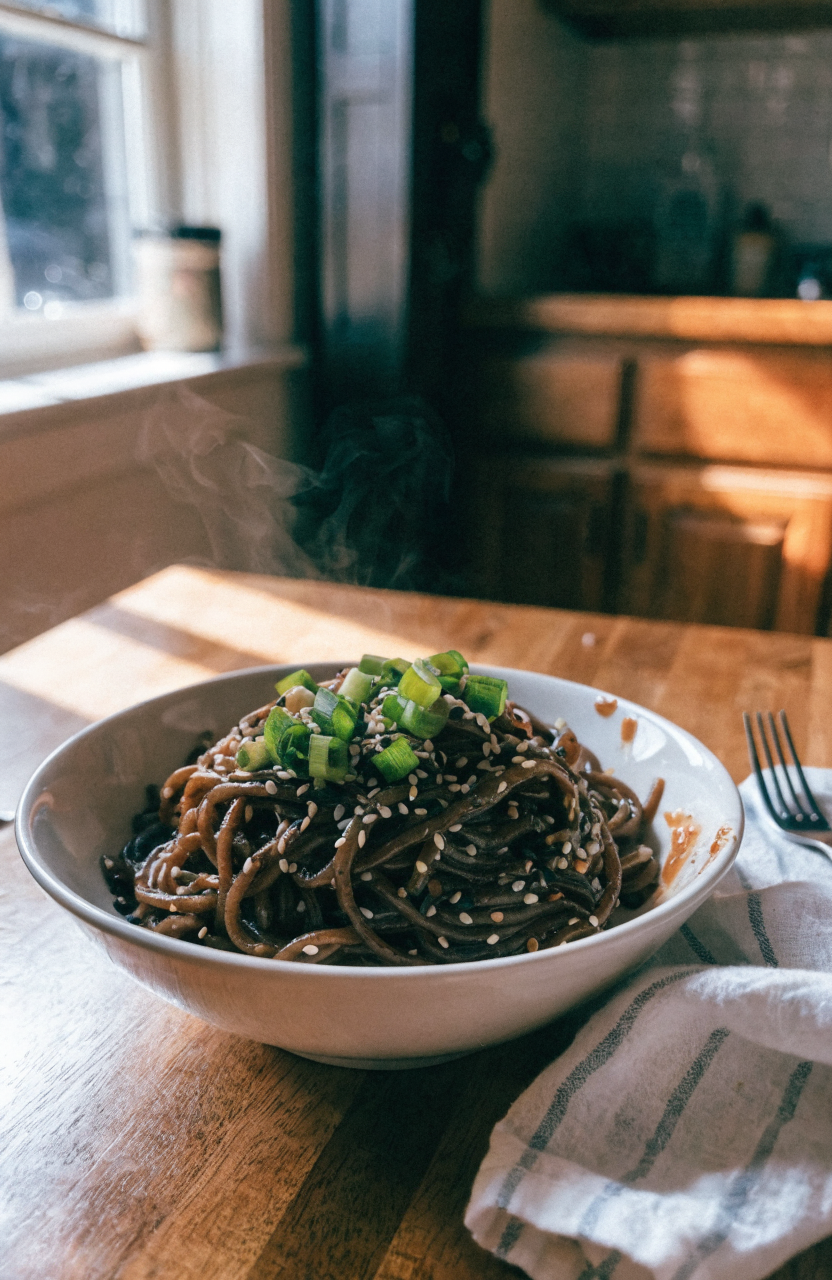
Why this garlic sesame noodles works
The trick that makes these garlic sesame noodles stand out is the warm-toss: I finish the sauce in a small saucepan just until it’s fragrant and glossy, then pour it over hot drained noodles and toss immediately. That brief heat bloom brings the oils, garlic, and toasted sesame together so the sauce emulsifies briefly and clings to the noodles. I kept the key ingredient ratio at roughly 3 tablespoons of oil (a mix of neutral oil and toasted sesame oil) to each 8 ounces of noodles so the coating is rich but not greasy.
Another common problem is under-flavored garlic or garlic that burns and turns bitter. I solved that by gently blooming minced garlic in oil on low heat for 30–45 seconds—just until it’s aromatic—then adding the soy and vinegar to carry the flavor without overcooking the garlic. Lastly, I balance salty, tangy, and slightly sweet with a splash of rice vinegar and a teaspoon of brown sugar; this keeps the noodles bright instead of flat.
Key takeaways
- Toss sauce with piping-hot noodles immediately for even coating and glossy texture.
- Bloom garlic briefly in oil, then add liquid to avoid bitterness and boost aroma.
- Use a mix of neutral oil and toasted sesame oil to get sesame flavor without overpowering.
- Adjust soy and vinegar to taste; start conservative and add more if needed.
Ingredients you’ll need and what to substitute
This recipe uses pantry-friendly ingredients: dried noodles, garlic, soy sauce, sesame oil, rice vinegar, and a touch of sweetener and heat. I tested it with spaghetti, linguine, and Chinese-style wheat noodles—any long noodle works. For gluten-free needs, use rice noodles and rinse them briefly after cooking to stop softening. If you don’t have toasted sesame oil, you can increase neutral oil and add 1 teaspoon of tahini for a nutty undertone, but note tahini will make the sauce slightly thicker.
Substitutions that work well: tamari for a gluten-free soy alternative; maple syrup or honey instead of brown sugar (use less honey if it’s very runny); and apple cider vinegar in place of rice vinegar, but reduce to 2 teaspoons because it’s sharper. If you’d like more protein, top with pan-seared tofu or leftover shredded chicken—add these after you toss the noodles so they absorb sauce without cooling it too quickly.
Equipment
Essential tools for dependable results include a large pot for boiling, a colander, and a medium nonstick or stainless saucepan to finish the sauce. A pair of tongs or long-handled chopsticks helps toss hot noodles without breaking them. If you have a wide rimmed sheet pan or large rimmed bowl, use it to toss large batches; otherwise a large mixing bowl works fine.
How to make garlic sesame noodles
1. Cook the noodles
Bring a large pot of salted water to a rolling boil and cook 8 ounces of long noodles (spaghetti, linguine, or Asian wheat noodles) according to package directions until just shy of al dente—about 1 minute less than the package suggests. Reserve 1/3 cup of the starchy cooking water, then drain the noodles and return them to the hot pot off the heat. The retained heat helps the sauce cling when you toss.
2. Make the sauce
While the pasta cooks, combine 3 tablespoons neutral oil and 1 tablespoon toasted sesame oil in a small saucepan over low heat. Add 3 cloves minced garlic and gently sweat for 30–45 seconds until fragrant but not browned. Stir in 1/4 cup soy sauce, 2 teaspoons rice vinegar, 1 teaspoon brown sugar, 1/4 teaspoon crushed red pepper (adjust later), and 1 tablespoon finely grated fresh ginger if you like. Bring to a bare simmer for 20–30 seconds, stirring, then remove from heat. Taste and adjust: more rice vinegar for brightness, more brown sugar for balance, or a splash of reserved cooking water to loosen if it seems too thick.
3. Warm-toss to finish
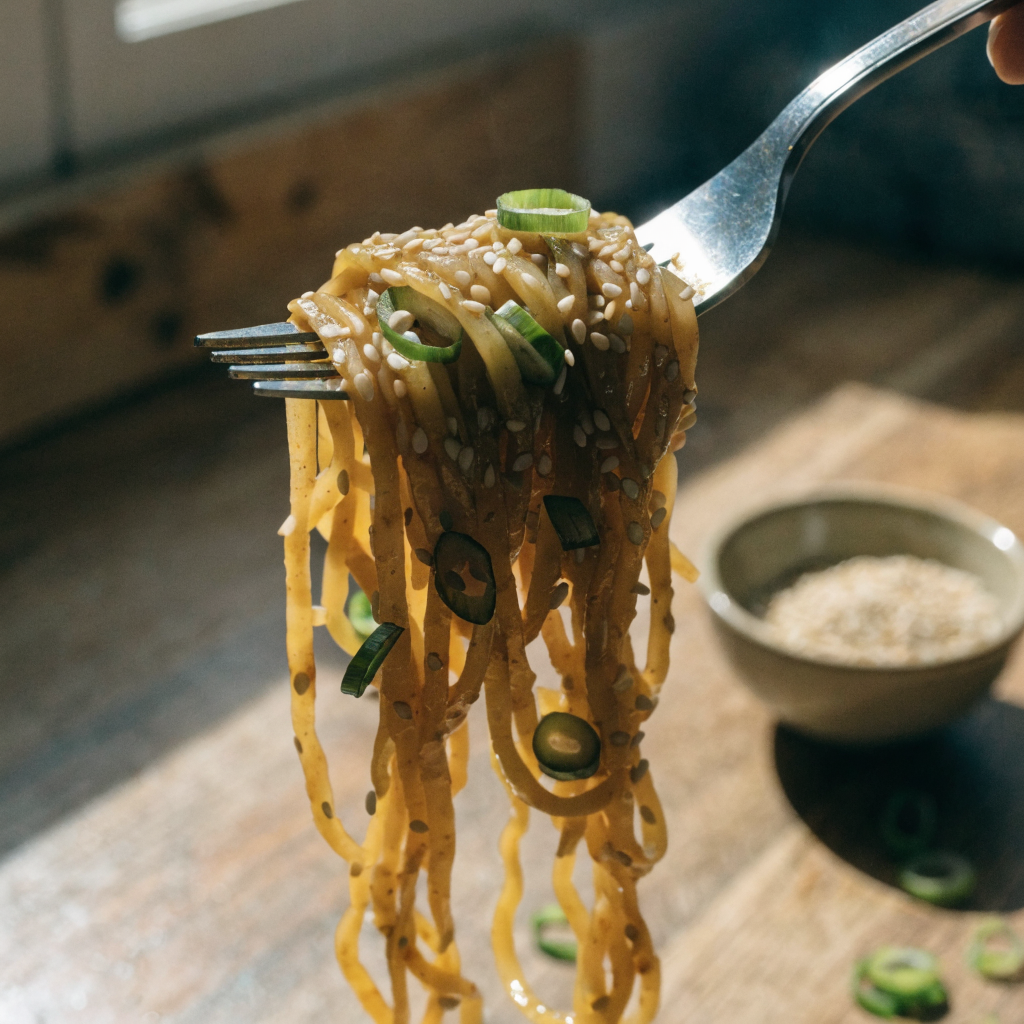
Pour the warm sauce over the hot drained noodles in the pot. Immediately add 2 tablespoons thinly sliced scallions and 1 tablespoon toasted sesame seeds. Toss vigorously with tongs or two forks for 30–60 seconds until the sauce is evenly distributed and the noodles look glossy. If the mixture seems dry, add the reserved cooking water 1 tablespoon at a time until you reach a silky sheen. Serve right away or keep warm for up to 10 minutes; the sauce adheres best when the noodles are hot.
4. Serve and garnish
Transfer to a serving bowl and garnish with extra scallions, a sprinkle of sesame seeds, and an optional drizzle of sesame oil. For a bright finish, a few thin strips of cucumber or a handful of shredded carrots add crunch and color.
Warning signs: if garlic is bitter, it was overcooked—start over and reduce heat next time. If the sauce separates into oily puddles, you either used too much oil or added the sauce to cold noodles; warm-tossing fixes this by emulsifying briefly.
Things I learned the hard way
- Don’t add raw garlic directly to boiling water or a very hot pan; it can burn and become bitter. Bloom it low and slow in oil for the best aroma.
- Adding sauce to cold noodles causes pooling. Always toss with hot noodles and use reserved cooking water to adjust viscosity.
- Too much toasted sesame oil makes a dish heaviness; using a small amount alongside neutral oil gives control and consistent sesame flavor.
- If you want a saucier noodle, increase reserved cooking water by 2–4 tablespoons—add slowly and test the sheen.
- First time I used all brown sugar and no vinegar; the noodles tasted flat. The vinegar brightens and keeps the overall flavor lively.
- Doubling the recipe works, but toss in a wide bowl or sheet pan to avoid clumping; you may need more reserved water to loosen the sauce for larger batches.
Variations to try
- Spicy peanut sesame: Stir in 2 tablespoons creamy peanut butter to the warm sauce and add 1 teaspoon Sriracha; whisk over low heat until smooth. Reduce brown sugar to 1/2 teaspoon to keep balance.
- Ginger-scallion accent: Add 2 tablespoons finely julienned ginger and 2 tablespoons chopped scallions to the final toss, and skip the brown sugar for a brighter profile.
- Cold sesame noodle salad: Let the tossed noodles cool, then refrigerate for 30 minutes and toss again with 1 tablespoon soy sauce and 1 teaspoon rice vinegar before serving; add crushed cucumber and toasted sesame seeds. No reheating required.
- Protein-forward: Fold in 8 ounces cubed pan-fried tofu or thinly sliced grilled chicken after tossing so protein warms in the sauce; expect to add 1–2 tablespoons reserved cooking water for sauciness.
Storage, freezing, and reheating
Refrigerator: Store leftover garlic sesame noodles in an airtight container for up to 3 days. The sauce will thicken and the noodles may tighten; loosen with 1–2 tablespoons warm water and reheat gently in a skillet over medium-low heat while tossing to revive the gloss.
Freezing: I don’t recommend freezing finished sesame noodles—the texture and sauce separate when thawed. If you want to prep ahead, freeze the sauce (without the noodles) in a freezer-safe container for up to 2 months; thaw and warm gently before tossing with freshly cooked noodles.
Reheating: For a single serving, reheat in a nonstick skillet over low heat with 1 tablespoon water, tossing until glossy and warmed through (about 2–3 minutes). Microwave reheating works in a pinch: add 1 tablespoon water, cover loosely, and heat 45–60 seconds, stir, and heat an additional 30 seconds if needed.
What to serve with garlic sesame noodles
These garlic sesame noodles pair naturally with quick vegetable sides and light proteins:
- Stir-fried broccoli or snap peas with a splash of soy and sesame
- Pan-seared tofu or grilled chicken for added protein
- A simple cucumber salad tossed with rice vinegar and sesame seeds for crunch
- Steamed edamame sprinkled with flaky salt
15-Minute Garlic Sesame Noodles
Ingredients
Equipment
Method
- Bring a large pot of salted water to a rolling boil and cook the noodles according to package directions until just under al dente (about 1 minute less than package time). Reserve 1/3 cup of the cooking water, then drain and return the noodles to the hot pot off the heat.
- In a small saucepan over low heat, warm the neutral oil and toasted sesame oil. Add the minced garlic and sweat gently for 30–45 seconds until fragrant but not browned. Stir in soy sauce, rice vinegar, brown sugar, and crushed red pepper. Bring to a very gentle simmer for 20–30 seconds, then remove from heat and taste to adjust seasoning.
- Pour the warm sauce over the hot drained noodles. Add 1 tablespoon of sliced scallions and the toasted sesame seeds, then toss vigorously with tongs for 30–60 seconds until the noodles are evenly coated and glossy. If the noodles seem dry, add reserved cooking water 1 tablespoon at a time until silky.
- Transfer to bowls, garnish with remaining scallions, extra sesame seeds, and optional cilantro or protein, and serve immediately.
Notes
Frequently asked questions
Can I use rice noodles for garlic sesame noodles? Yes, you can use rice noodles; follow package times and rinse briefly under warm water after cooking to prevent them from becoming gluey. Use reserved cooking water sparingly because rice noodles release less starch.
How do I stop the sauce from separating? Toss the warm sauce with hot noodles immediately and add a tablespoon or two of reserved cooking water to help emulsify the oil and soy. Avoid pouring cold liquid into hot oil without a carrier (like starchy water).
Can I make these noodles ahead? Make the sauce ahead and store it in the refrigerator for up to 3 days or freeze for up to 2 months; mix with freshly cooked hot noodles just before serving for best texture.
Are these noodles vegan? Yes, the core recipe is vegan when you use a plant-based sweetener and avoid honey; use tamari for gluten-free needs.
Why are my noodles sticky after tossing? Sticky noodles usually mean they were overcooked or not drained well. Cook to just before al dente and toss quickly—if sticky, rinse briefly under warm water to remove excess starch, then reheat gently and toss with sauce.
Can I double the recipe? Yes, double ingredients but toss in a wider container or sheet pan to keep noodles from clumping; you may need extra reserved water to achieve the same sheen for larger batches.
Closing
These garlic sesame noodles deliver big flavor with dependable technique for weeknights: bloom the garlic gently, finish the sauce warm, and toss with hot noodles for glossy, evenly coated results. Finish with extra scallions and sesame seeds, and warm any added protein briefly so it absorbs the sauce. Stored leftovers revive well with a splash of warm water and a quick toss before serving.

Leave a Reply