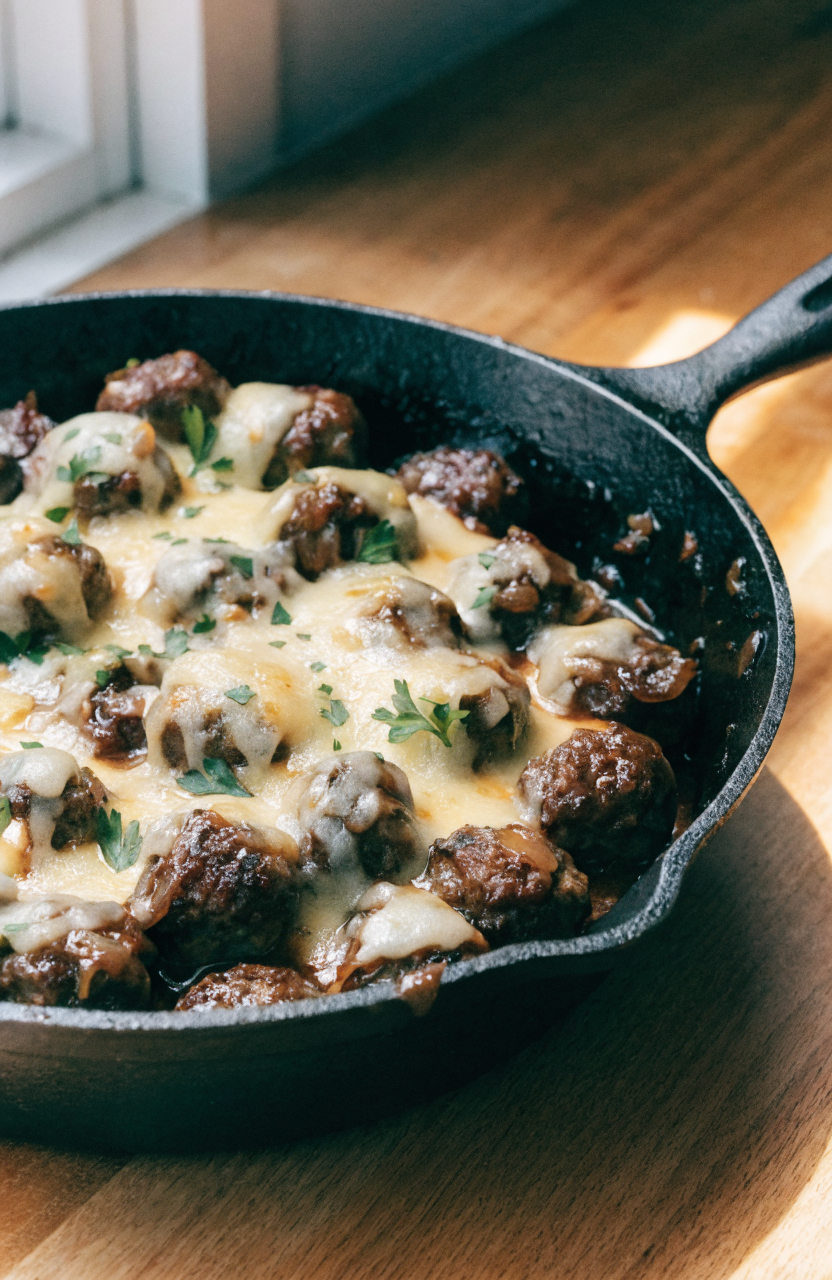
The first time I tried French onion meatballs I ended up with soft, flavorful meat that fell apart in the sauce — lesson learned the hard way. My final version keeps the meatballs intact by searing them before they finish in a rich, caramelized onion sauce, and it puts the focus where it should be: real onion flavor. These French onion meatballs are browned on the stovetop, simmered gently in a savory onion sauce, then finished with a blanket of Gruyère and mozzarella for a melty topping.
Why this French onion meatballs recipe works
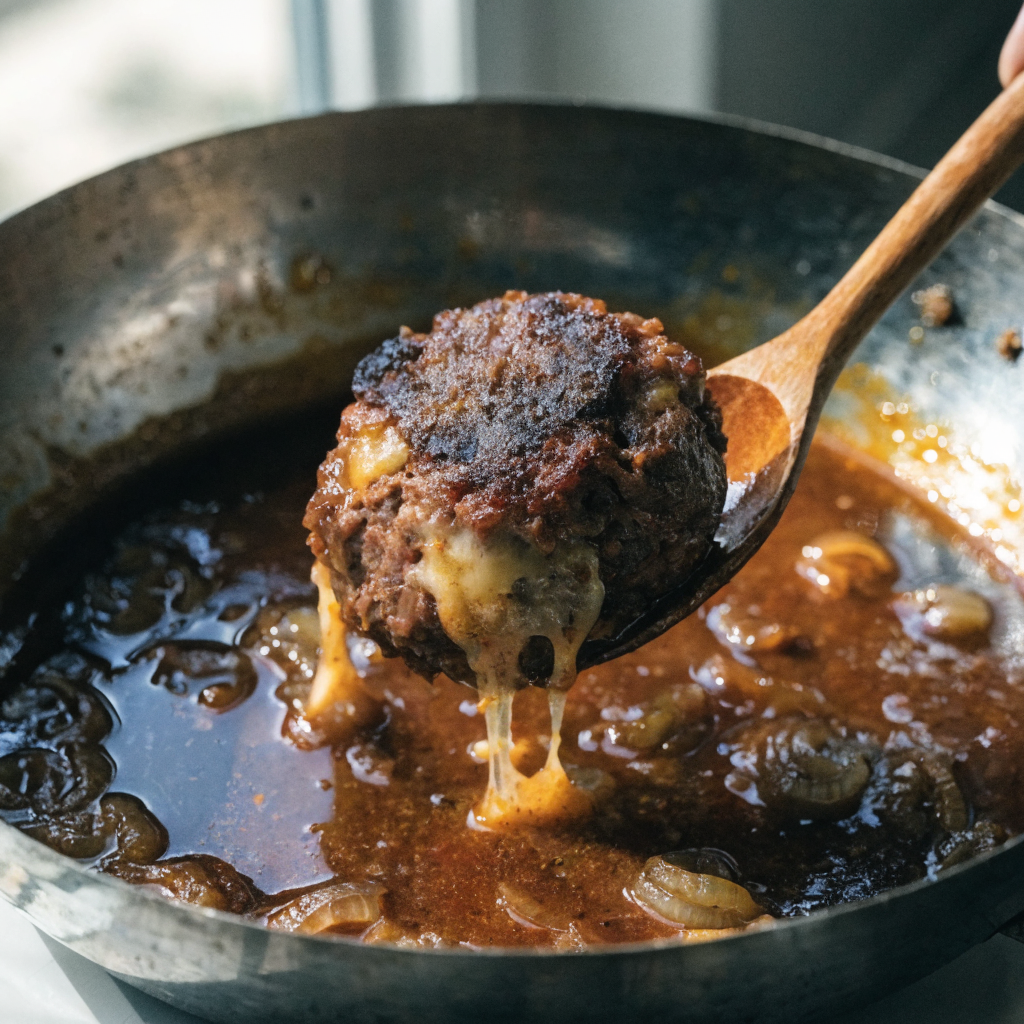
What makes these French onion meatballs dependable is a clear separation of roles: caramelized onions provide the sauce’s backbone and a small portion gets folded into the meat mixture for deeper flavor without making the meatballs soggy. I sear the meatballs first in a 12-inch skillet to build a crust that resists falling apart, then simmer them gently in the sauce so they finish cooking without drying. During testing I discovered that adding an egg and a modest amount of breadcrumbs is enough binder when the meat is chilled briefly; too much breadcrumb makes them dense, too little and they crumble. Finishing under the broiler for 2–3 minutes melts the cheese and gives the dish a pleasing golden top.
Key takeaways
- Sear meatballs first to keep them intact during simmering.
- Fold a small amount of caramelized onion into the meat mixture and reserve the rest for the sauce.
- Chill the formed meatballs 15 minutes to help them hold shape while searing.
Ingredients you’ll need and what to substitute
This recipe relies on a few key items: ground beef (I use an 80/20 for flavor and juiciness), yellow onions for caramelizing, a splash of low-sodium beef broth to deglaze, and Gruyère plus mozzarella for the cheese topping. If you prefer leaner meat, use 90/10 but expect drier meatballs—add a tablespoon of olive oil or an extra egg white to compensate. For dairy alternatives, swap Gruyère for a sharp white cheddar and use part-skim mozzarella for a lighter melt. If you don’t have fresh thyme, 1 teaspoon dried thyme works but add it with the onions while they caramelize so the flavor blooms. Plain breadcrumbs can be swapped with panko for a lighter interior; reduce panko by 1/4 cup if you want a slightly tighter texture.
Equipment
You’ll need a 12-inch oven-safe skillet (cast iron like a Lodge works well), a large sauté pan for onions if you prefer not to use the skillet, a rimmed baking sheet lined with parchment for resting, and a meat thermometer for accuracy. If you don’t have an oven-safe skillet, transfer seared meatballs to a 9×13-inch baking dish before finishing under the broiler.
How to make French onion meatballs
Caramelize the onions and make the sauce
Start by thinly slicing 3 large yellow onions. In a 12-inch skillet over medium-low heat, melt 2 tablespoons of butter with 1 tablespoon olive oil. Add the onions with a generous pinch of salt and cook, stirring every few minutes, until they are deeply brown and sweet—about 35 to 45 minutes. This slow process builds the sauce’s flavor. Toward the end, increase the heat briefly, add 1 teaspoon fresh thyme leaves, then deglaze with 1/3 cup low-sodium beef broth and simmer until mostly absorbed. Remove two-thirds of the caramelized onions to a bowl for the sauce; keep one-third to fold into the meat mixture.
Make and chill the meatballs
In a large bowl combine 1 pound ground beef (80/20), the reserved one-third of caramelized onions (coarsely chopped), 1 large egg, 1/2 cup plain breadcrumbs, 1/4 cup grated Parmesan, 2 cloves minced garlic, 1 teaspoon Worcestershire sauce, 1 teaspoon kosher salt, 1/2 teaspoon black pepper, and 1 tablespoon chopped fresh parsley. Mix gently with your hands until just combined—overworking makes meatballs tough. Form into 18 even meatballs (about 1 1/4 inches each) and place on a rimmed sheet. Chill uncovered in the refrigerator for 15 minutes; this firms them up for searing.
Sear, simmer, and finish
Heat 2 tablespoons neutral oil in the same 12-inch skillet over medium-high heat until shimmering. Sear meatballs in batches without crowding until a brown crust forms—about 2 minutes per side. Transfer seared meatballs to the bowl with the reserved caramelized onions. In the skillet, add 2 tablespoons butter and 1 tablespoon flour to make a light roux, cook 1 minute, then slowly whisk in 2 cups low-sodium beef broth and 1/2 teaspoon Dijon mustard. Scrape up browned bits from the pan, add the reserved onions back into the skillet, and bring to a gentle simmer. Return meatballs to the skillet, cover, and simmer gently for 12 minutes, or until the internal temperature of the meatballs reaches 160°F. Spoon sauce over the meatballs, sprinkle 1 cup grated Gruyère and 1/2 cup shredded mozzarella evenly, and place the skillet under a preheated broiler 4 inches from the heat for 2–3 minutes until cheese is bubbly and lightly golden. Let rest 5 minutes before serving.
Things I learned the hard way
- Don’t skip chilling the formed meatballs—my first batch fell apart during searing because they were too warm and soft.
- Sear in batches; overcrowding the pan steals the crust and causes steaming.
- A small roux stabilizes the sauce and prevents it from being too thin after simmering the meatballs.
- Use an instant-read thermometer—visual color alone can mislead you about doneness.
- If your onions brown too quickly, lower the heat and stir more often; patience yields sweet, not burnt, onions.
- When using leaner beef, add 1 tablespoon olive oil to the meat mixture to keep the center moist.
Variations to try
- Beef and veal mix: Replace half the ground beef with ground veal for a softer texture; reduce simmer time by 2 minutes because veal cooks quickly.
- Mushroom French onion: Add 8 ounces finely chopped cremini mushrooms to the caramelized onions; cook until their moisture evaporates before deglazing to avoid a watery sauce.
- Herby twist: Swap parsley for a tablespoon of chopped fresh rosemary and reduce thyme to 1/2 teaspoon; rosemary’s piney note pairs well with beef but use sparingly to avoid overpowering the onion.
- Stovetop-only finish: If you don’t want to broil, cover the skillet after adding cheese and let sit off heat for 6–8 minutes until cheese softens; it won’t brown but will still be melty.
Storage, freezing, and reheating
Refrigerate leftovers in an airtight container for up to 3 days. Place meatballs and sauce in a shallow airtight container so they cool quickly. To reheat, warm gently in a 350°F oven for 12–15 minutes covered with foil, or reheat on the stovetop over low heat until the sauce is simmering and meatballs reach 165°F. These meatballs freeze well: cool completely, place in a single layer on a sheet to flash-freeze for 1 hour, then transfer to a freezer-safe bag for up to 3 months. Thaw overnight in the refrigerator and reheat as above; expect a slightly softer texture after freezing.
What to serve with French onion meatballs
These are great over buttered egg noodles, creamy mashed potatoes, or with crusty baguette slices for sopping up sauce. For a lighter plate, serve alongside steamed green beans or a crisp arugula salad with lemon vinaigrette. They also pair well with a simple risotto or polenta for a comforting weeknight supper.
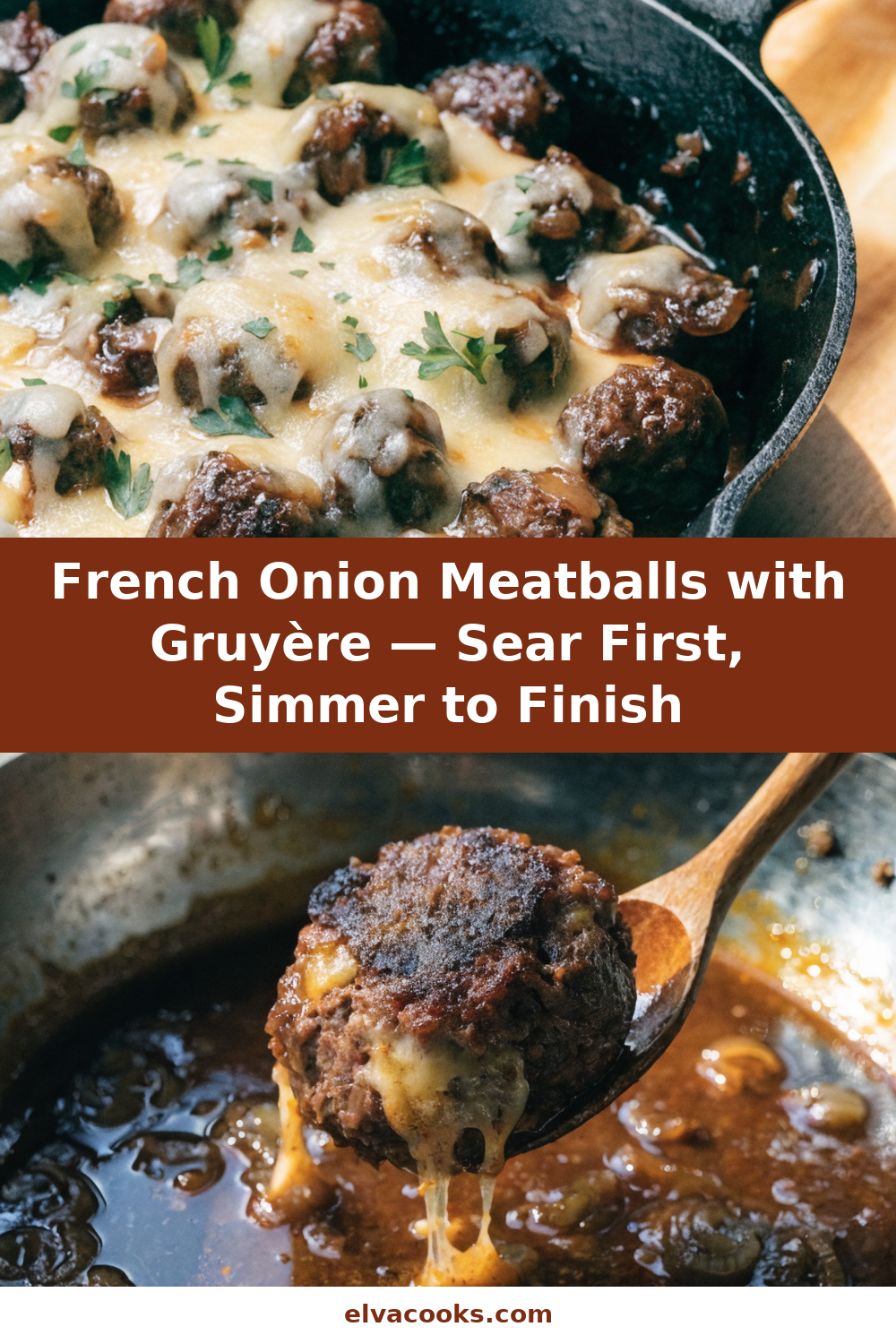
French Onion Meatballs with Gruyère
Ingredients
Equipment
Method
- Heat 2 tablespoons butter and 1 tablespoon olive oil in a 12-inch skillet over medium-low heat; add the sliced onions and a pinch of salt and cook, stirring every few minutes, until deeply browned and sweet, about 35–45 minutes.
- Once onions are deeply browned, add 1 teaspoon thyme (if using) and deglaze the pan with 1/3 cup low-sodium beef broth, simmer until mostly absorbed; remove two-thirds of the onions to a bowl and reserve one-third for the meat mixture.
- In a large bowl combine 1 pound ground beef, the reserved one-third caramelized onions (coarsely chopped), 1 large egg, 1/2 cup breadcrumbs, 1/4 cup grated Parmesan, 2 minced garlic cloves, 1 tablespoon Worcestershire sauce, 1 teaspoon kosher salt, 1/2 teaspoon black pepper, and 1 tablespoon chopped parsley; mix gently until just combined.
- Form the mixture into 18 even meatballs (about 1 1/4 inches) and place on a rimmed baking sheet; chill uncovered in the refrigerator for 15 minutes.
- Heat 2 tablespoons neutral oil in the same 12-inch skillet over medium-high heat until shimmering; sear meatballs in batches without crowding until browned on all sides, about 2 minutes per side, and transfer seared meatballs to the bowl with reserved caramelized onions.
- In the skillet, melt 2 tablespoons butter, stir in 1 tablespoon flour and cook 1 minute to form a roux, then slowly whisk in 2 cups low-sodium beef broth and 1/2 teaspoon Dijon mustard, scraping up browned bits.
- Add the reserved caramelized onions back to the skillet and bring the sauce to a gentle simmer; return meatballs to the skillet, cover, and simmer gently for 12 minutes or until an instant-read thermometer reads 160°F.
- Sprinkle 1 cup grated Gruyère and 1/2 cup shredded mozzarella evenly over the meatballs and place the skillet under a preheated broiler 4 inches from the heat for 2–3 minutes until the cheese is bubbly and lightly golden; let rest 5 minutes before serving.
Notes
Frequently asked questions
Can I make the meatballs ahead of time? Yes. You can form and refrigerate the raw meatballs for up to 24 hours before searing; bring them straight from the fridge to the pan and allow an extra minute per side when searing. Chilling helps them hold their shape.
Why did my meatballs become dense? Overmixing or using too much breadcrumb leads to dense meatballs. Mix only until combined and stick to about 1/2 cup breadcrumbs for a pound of meat. If using panko, slightly reduce the amount.
Can I use ground turkey or chicken? You can substitute ground turkey or chicken, but they are leaner and dry out faster; add 1 tablespoon olive oil or an extra egg to the mixture and check doneness at 160°F to avoid overcooking.
How do I get deeply caramelized onions without burning them? Cook onions over medium-low heat, stirring every few minutes, and resist increasing heat to hurry the process. If they begin to stick or brown too quickly, lower the heat and stir more frequently.
Is broiling necessary for the cheese? Broiling gives the cheese a slight golden top; if you prefer not to broil, cover the skillet off heat for 5–8 minutes until cheese melts. The flavor will be the same but without browning.
Closing
These French onion meatballs deliver concentrated onion flavor, a reliable sear-to-simmer method, and a melty cheese finish that makes them a dependable weeknight dish. I like to double the onions and save extra caramelized onions in the fridge for sandwiches the next day.

Leave a Reply