When I first tried making a French onion roast, the onions dissolved into the sauce and the meat came out a little stringy in places. After a few rounds I landed on a dependable approach that keeps long-simmered onions recognizable while producing a roast that pulls apart with a fork. This French onion roast is a braised chuck roast layered with deeply caramelized onions, a savory shallot- and beef-stock pan sauce, and a short finish under the broiler for color.
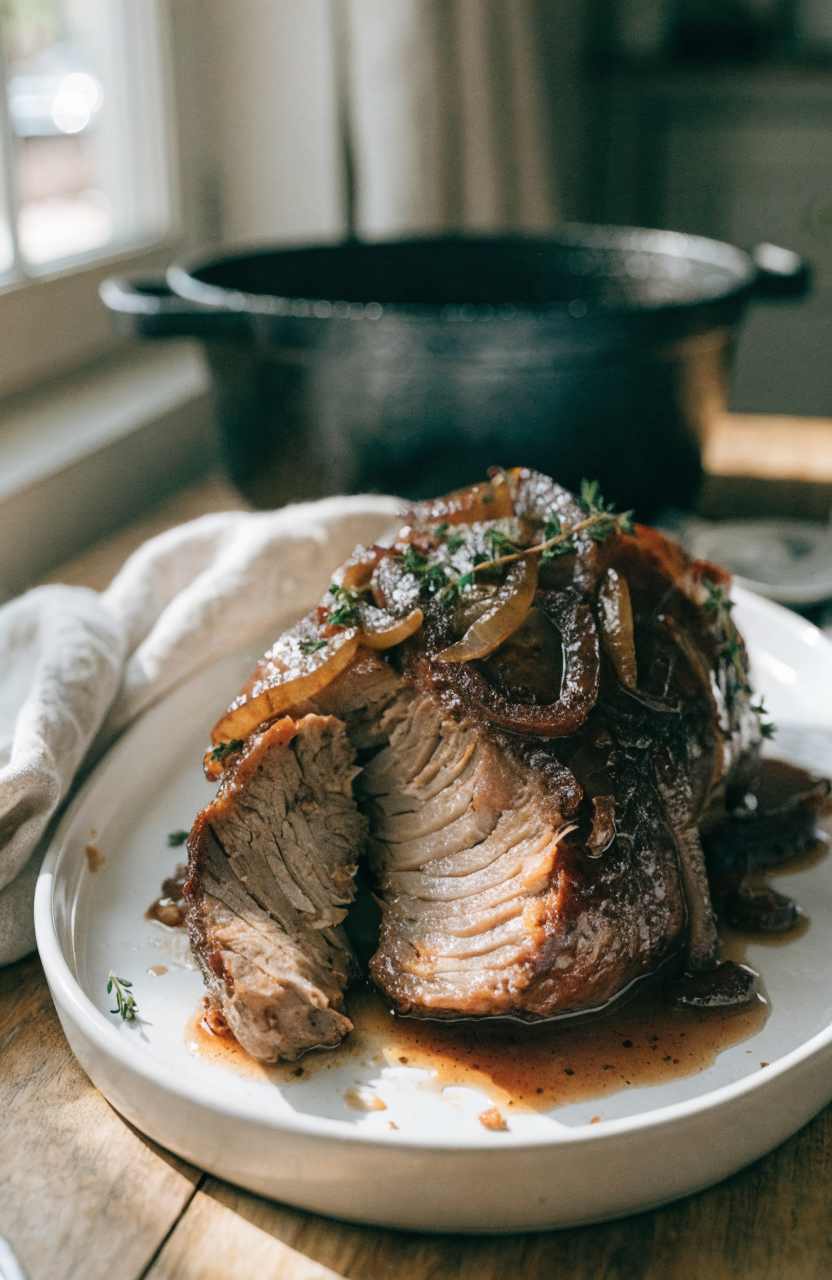
Why this French onion roast works
The key technique is a sequence of three steps: caramelize the onions low and slow, sear the beef well, then braise the whole thing covered at a gentle oven temperature. Caramelizing the onions separately lets them develop sweet, nutty flavors without turning to mush in the braise. Searing the roast creates Maillard flavor and a browned surface that improves the pan sauce. Finally, slow braising at 300°F with just enough stock gives the roast time to break down connective tissue without evaporating the liquid, so the meat becomes fork-tender and pulls apart cleanly.
During testing I adjusted the onion-to-meat ratio and the initial onion cooking time. The first version used too many thinly sliced onions and they dissolved into a thick gravy; the final version uses a compact onion layer and a brief broiler finish so the onions remain visible and slightly crisp at the edges. The result fits Elva Cooks’ practical, trouble-shooting style: clear doneness cues, realistic timing, and repeatable outcomes.
Key takeaways
- Caramelize onions ahead of time to preserve texture and deepen flavor.
- Sear the roast until a dark crust forms — don’t skip this step.
- Braise covered at 300°F until the roast reaches 200–205°F internal for easy pull-apart meat.
Ingredients you’ll need and what to substitute
This recipe relies on a well-marbled 3-pound boneless chuck roast for good connective tissue that melts during braising. Yellow onions provide the classic French-onion backbone; I use a mix of one large yellow onion and two medium sweet onions to balance sweetness and savory notes. Beef stock, a splash of balsamic vinegar, and Worcestershire sauce round out the braising liquid — they add depth without introducing off flavors. If you prefer a lighter sauce, substitute low-sodium beef stock and reduce added salt in the recipe.
Substitutions: use bone-in chuck or a 3-pound arm roast if a chuck isn’t available; for a modest acid boost in place of extra stock, add 1 tablespoon tomato paste and a squeeze of lemon at the end of reduction; for a quicker weeknight method, use a 6-quart slow cooker and cook on low 7–8 hours, but expect softer onions and a looser braising liquid.
Equipment
You’ll need a 6- to 7-quart Dutch oven with a tight-fitting lid for even heat and enough space to nest the roast and onions. A heavy skillet is useful for searing and caramelizing if you don’t want to use the Dutch oven for the onions. A meat thermometer with a probe is essential for accurate doneness cues. A rimmed baking sheet or broiler-safe pan is required for the short broil at the end. If you substitute a slow cooker, you’ll need a 6-quart slow cooker.
How to make French onion roast
Prep and caramelize the onions
Set an oven rack to the middle position and preheat the oven to 300°F. Peel and slice 3 large onions into 1/4-inch half-moons. In a large skillet or your Dutch oven set over medium-low heat, melt 3 tablespoons unsalted butter with 1 tablespoon olive oil. Add the sliced onions and a generous pinch of salt and cook, stirring occasionally, until deep golden brown, 35–45 minutes. Watch for the point where the onions stop releasing water and begin to brown; that’s when the sugars concentrate and the flavor deepens. If the pan dries out, add up to 2 tablespoons of water to prevent scorching.
Sear the roast and build flavor
While the onions are finishing, pat a 3-pound boneless chuck roast dry and season all over with 1 1/2 teaspoons kosher salt and 1 teaspoon black pepper. Heat 1 tablespoon neutral oil in a large heavy Dutch oven over medium-high heat until shimmering. Sear the roast 3–4 minutes per side, including edges, until a deep brown crust forms. Transfer the roast to a plate.
Assemble and braise
Keep 1 cup of the caramelized onions aside for topping. To the Dutch oven with the fond, add 1 tablespoon tomato paste and cook 1 minute, stirring. Add 1 cup low-sodium beef stock, 1/2 cup water, 2 teaspoons Worcestershire sauce, and 1 tablespoon balsamic vinegar; scrape the browned bits into the liquid. Bring to a simmer, then nestle the roast into the braising liquid and pile the remaining onions around and on top of the roast. The liquid should come about halfway up the sides of the roast; add an extra 1/4 cup stock if needed. Cover and transfer to the 300°F oven.
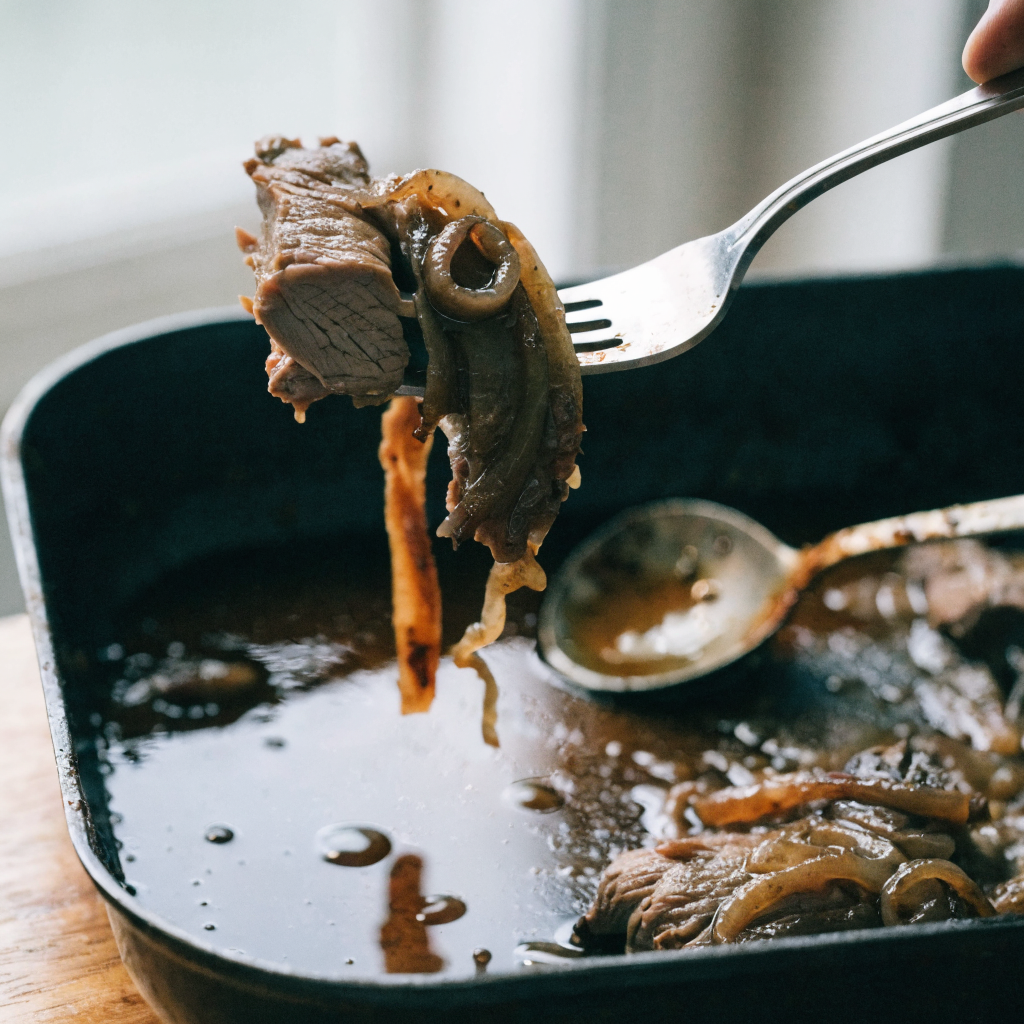
Braise until the roast is fork-tender and reaches an internal temperature of about 200–205°F, 2 1/2 to 3 hours depending on thickness. Start checking at 2 hours by sliding a fork into the center; it should meet very little resistance and pull apart easily.
Finish and rest
When the roast is done, carefully lift it out and let it rest on a cutting board covered loosely with foil for 15 minutes. Meanwhile, skim excess fat from the braising liquid and reduce the liquid over medium-high heat on the stovetop until slightly thickened, 5–8 minutes; taste and adjust seasoning. Shred the roast into large chunks or pull apart with forks, return it to the pan to coat with sauce and spoon the reserved caramelized onions over the top. For a browned finish, place the Dutch oven (or transfer to a broiler-safe dish) under the broiler for 2–3 minutes—watch closely to avoid burning.
Things I learned the hard way
- Don’t rush the onions — under-caramelized onions taste raw and won’t hold up in the braise.
- Pat the roast very dry before searing; surface moisture prevents a good crust.
- If the braise liquid is too shallow, the top of the roast dries out; aim for liquid halfway up the roast sides.
- Check for pull-apart tenderness, not a specific oven time; ovens vary and roast shape matters.
- My first attempt used a thin roast and it fell apart into stringy bits; choose a well-shaped chuck and remove from heat at 200–205°F for best texture.
Variations to try
- Herb-forward: add 2 sprigs fresh thyme and 1 bay leaf to the braise; remove before serving. No timing change required.
- Mushroom version: sauté 8 ounces sliced cremini mushrooms with the onions and reduce braise liquid by 1/4 cup to keep sauce concentrated.
- Mustardy finish: whisk 1 tablespoon Dijon mustard into the reduced sauce off heat for tangy depth; no temperature change.
Storage, freezing, and reheating
Refrigerate leftovers in an airtight container for up to 4 days. Store meat and sauce together to keep the roast moist. This dish freezes well: cool completely, portion into freezer-safe containers, and freeze up to 3 months. Thaw overnight in the refrigerator, then reheat gently on the stovetop over low heat until warmed through (about 8–12 minutes), adding a splash of stock if the sauce thickened. Avoid reheating in a hot oven which can dry the meat; low, gentle stovetop or 300°F oven covered until warm is best.
What to serve with French onion roast
Serve this roast with creamy mashed potatoes to soak up the sauce, buttered egg noodles tossed with parsley, roasted root vegetables, or a simple green salad with a bright vinaigrette to cut the richness.
French Onion Roast (Pull-Apart Braised Chuck Roast)
Ingredients
Equipment
Method
- Heat 3 tablespoons butter and 1 tablespoon olive oil in a large skillet or Dutch oven over medium-low heat; add 3 sliced onions and a pinch of salt and cook, stirring occasionally, until deep golden brown, 35–45 minutes; reserve 1 cup of the finished onions for topping.
- Pat the 3 lb roast very dry and season with 1 teaspoon kosher salt and 1/2 teaspoon black pepper; heat 1 tablespoon neutral oil in a Dutch oven over medium-high heat and sear the roast 3–4 minutes per side until a dark crust forms, including edges, then remove to a plate.
- Add 1 tablespoon tomato paste to the Dutch oven and cook 1 minute, then stir in 1 cup beef stock, 1/2 cup water, 2 teaspoons Worcestershire sauce, and 1 tablespoon balsamic vinegar, scraping up browned bits; nestle the roast into the liquid and pile the remaining caramelized onions around and on top, adding extra stock so liquid reaches halfway up the roast sides; cover and transfer to a 300°F oven.
- Braise until very tender and an instant-read thermometer in the center reads 200–205°F and a fork slides in with little resistance, about 2 1/2–3 hours depending on roast shape; begin checking at 2 hours.
- Remove the roast and rest under foil 15 minutes; skim fat from liquid and reduce over medium-high heat until slightly thickened, 5–8 minutes; shred or pull the roast into large chunks and return to the sauce, spooning reserved onions over the top; for a browned finish, broil 2–3 minutes, watching closely.
- Serve warm with mashed potatoes, noodles, or roasted vegetables.
Notes
Frequently asked questions
How long should I braise a chuck roast for pull-apart meat? Braise at 300°F until it reaches 200–205°F internal and pulls apart easily, typically 2 1/2–3 hours for a 3-pound roast; check for tenderness starting at 2 hours.
Can I make this in a slow cooker? Yes — caramelize the onions and sear the roast first, then transfer to a 6-quart slow cooker with the braising liquid and cook on low 7–8 hours. The onions will be softer and the sauce looser.
Why did my roast dry out? Most often the liquid level was too low or the roast was overcooked past 205°F. Keep liquid halfway up the roast sides and remove at 200–205°F.
Can I use a different cut of beef? Use a cut with good marbling and connective tissue like chuck or arm roast; lean cuts like sirloin will not become as tender when braised.
How do I thicken the sauce? Reduce it on the stovetop until coated on a spoon, or whisk 1 tablespoon cornstarch with 1 tablespoon cold water and stir into simmering sauce for 1–2 minutes until thickened.
Closing
This French onion roast gives you reliably pull-apart beef with onions that remain flavorful and identifiable — a method I settled on after fixing texture and timing issues in early tests. It’s a straightforward roast to make on a weekend or for a special weeknight when you want extra comfort without uncertainty.

Leave a Reply